

Bringing a newborn home is one of life's most beautiful experiences — but it can also come with a few surprises, including dry, flaky, or irritated skin. If you've noticed your baby's skin looking less than perfect, you're not alone. Newborn skin conditions are incredibly common, and most are completely manageable with the right care.
Here's everything you need to know about newborn dryness and eczema — and how to help.
Why Do Newborns Get Dry Skin?
Newborns spend nine months surrounded by amniotic fluid in the womb. After birth, their skin begins adjusting to the outside world — a much drier environment. This transition often causes the outer layer of skin to peel or flake in the first few weeks of life. This is completely normal and usually resolves on its own.
Other common causes of newborn dry skin include:
- Low humidity — air conditioning and heating can strip moisture from the air and from baby's skin
- Overbathing — bathing too frequently removes the skin's natural oils
- Harsh products — soaps, wipes, or detergents with sulphates or fragrances can irritate delicate skin
- Genetics — if eczema runs in the family, your baby may be more prone to dry, sensitive skin
What Is Baby Eczema?
Baby eczema (also called atopic dermatitis) is a chronic skin condition that causes the skin to become dry, itchy, red, and inflamed. It affects around 1 in 5 children and often appears in the first few months of life. While it can look alarming, eczema is not contagious and is very manageable with consistent care.
Eczema occurs when the skin's natural barrier is weakened, making it less able to retain moisture and more vulnerable to irritants and allergens.
How to Tell the Difference: Normal Dryness vs Eczema
It can be tricky to distinguish between normal newborn dryness and eczema. Here's a simple guide:
- Normal dryness — flaking or peeling skin in the first 2–3 weeks, usually on the hands, feet, and ankles. Improves on its own without treatment.
- Eczema — red, inflamed patches that are itchy and recurring. Commonly appears on the cheeks, forehead, scalp, and the creases of elbows and knees. May weep or crust over in more severe cases.
If you're unsure, always consult your paediatrician for a proper diagnosis.
Tips to Manage Newborn Dry Skin and Eczema
1. Moisturise Frequently — Especially After Baths
Moisturising is the single most important thing you can do for dry or eczema-prone baby skin. Apply a gentle, fragrance-free moisturiser within 3 minutes of bath time while the skin is still slightly damp to lock in hydration.
Our Natural Hydrating Baby Lotion is formulated with natural botanicals to deeply nourish and support the skin barrier without any harsh chemicals. For more intense dryness or flare-ups, our Natural Multi-Purpose Soothing Cream provides targeted, concentrated relief.
2. Bathe Gently and Not Too Often
For babies with dry or eczema-prone skin, 2–3 baths per week is ideal. Use lukewarm water (not hot) and keep baths short — 5 to 10 minutes maximum. Use a gentle, soap-free wash that cleanses without stripping the skin's natural oils.
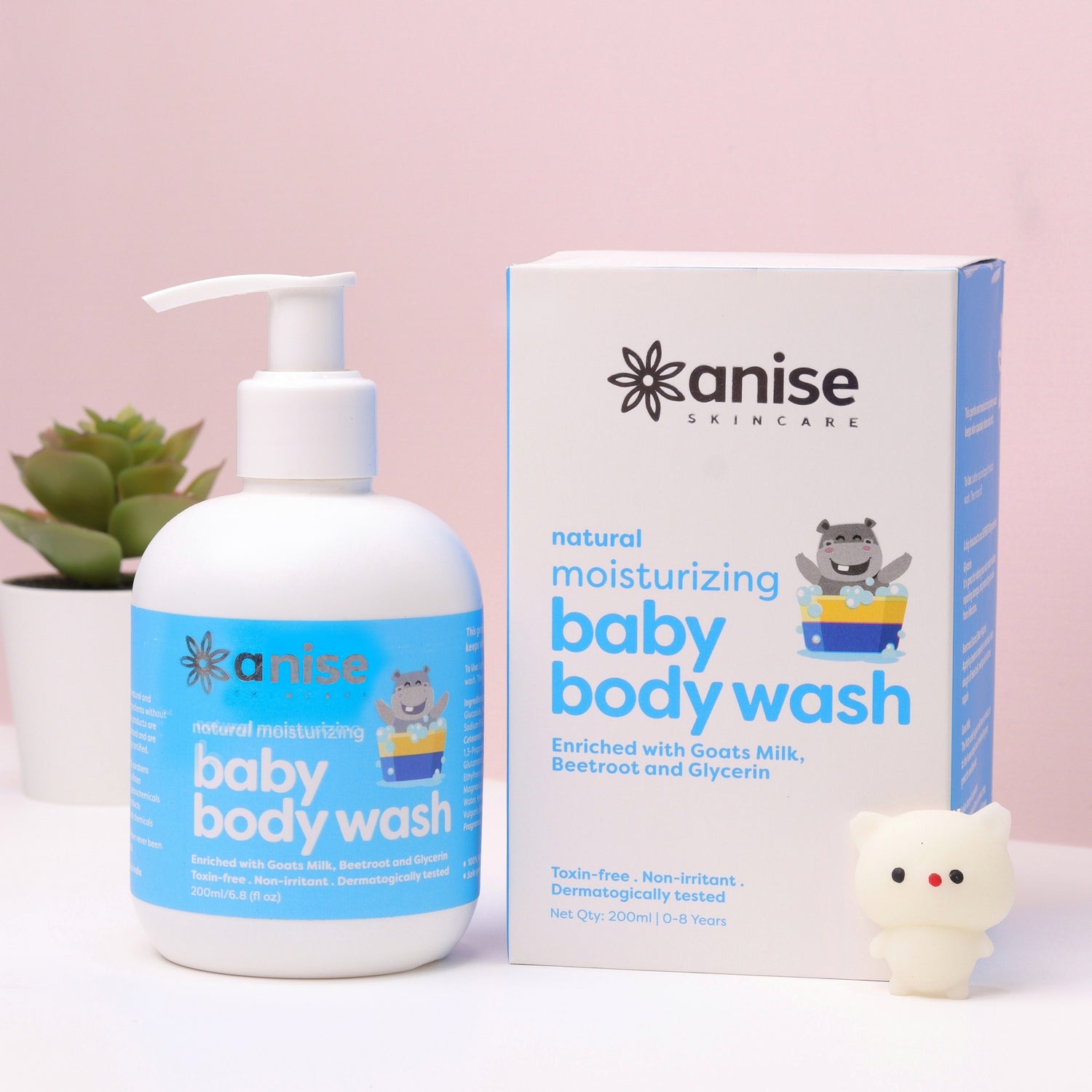
Our Natural Moisturizing Baby Body Wash is powered by turmeric root, neem, licorice, cranberry, and glycerin — ingredients chosen to cleanse gently while actively soothing and nourishing sensitive skin.
3. Choose Fragrance-Free Everything
Artificial fragrances are one of the most common triggers for eczema flare-ups. Check not just your skincare products but also your baby's laundry detergent, wipes, and any fabric softeners. Switch to fragrance-free, gentle alternatives wherever possible.
4. Dress Baby in Soft, Breathable Fabrics
Rough or synthetic fabrics can aggravate sensitive skin. Opt for soft, breathable materials like 100% cotton. Avoid wool directly against the skin, and make sure clothing isn't too tight around the wrists, ankles, or neck.
5. Keep the Environment Comfortable
Maintain a cool, stable room temperature — overheating can trigger itching and worsen eczema. A humidifier in the nursery can help add moisture back into dry air, especially during winter months when heating is on.
6. Avoid Known Triggers
Common eczema triggers include heat, sweat, certain foods (if breastfeeding), pet dander, dust mites, and pollen. Keep a simple diary to track when flare-ups occur — patterns often emerge over time that can help you identify and avoid triggers.
7. Don't Scratch — Keep Nails Short
Babies can't help scratching itchy skin, which can break the skin and lead to infection. Keep your baby's nails trimmed short and consider soft cotton mittens at night if scratching is a problem.
8. Massage with a Nourishing Oil
Gentle massage with a plant-based oil can help improve skin hydration and support the skin barrier. Our Natural Baby Massage Oil is made with nourishing botanical oils that absorb easily and leave skin feeling soft and supple — a lovely way to bond while caring for your baby's skin.
When to See a Doctor
While most cases of newborn dryness and mild eczema can be managed at home, you should consult your paediatrician or a dermatologist if:
- The skin is weeping, crusting, or showing signs of infection (warmth, swelling, yellow discharge)
- Your baby seems very distressed or is unable to sleep due to itching
- The condition is not improving with consistent moisturising and gentle care
- You're unsure whether it's eczema or another skin condition
A doctor may recommend a prescription emollient or, in more severe cases, a mild topical steroid. Always follow medical advice for moderate to severe eczema.
A Gentle Routine Makes All the Difference
Managing newborn dryness and eczema is largely about consistency — a gentle, regular routine using the right products can make a significant difference to your baby's comfort and skin health.
If you're building a routine from scratch, our Anise Baby Care Bundle brings together everything you need in one convenient set, formulated with natural ingredients that are kind to even the most sensitive newborn skin.
You've got this — and your baby's skin will thank you for it.